

PREPARING FOR A C-SECTION: What actually makes recovery easier (PART 1)
Updated: Apr 29
There is a version of C-section preparation that most women are familiar with. Packing a hospital bag, confirming a date, making sure everything is ready for the baby. It is practical, necessary, and often the focus of those final weeks.

But what tends to be missing from the conversation is recovery.
This three-part series has been created to change that.
Across Part 1, Part 2 and Part 3, we are stepping through the full recovery journey in the way it is actually experienced. Not just the moment of birth, but what happens before, during, and long after you leave the hospital. In this first part, we focus on what happens before your C-section, the preparation that shapes everything that follows. In Part 2, we move into the first 24 to 72 hours after surgery, where the smallest decisions can make the biggest difference. And in Part 3, we look at longer-term recovery, including scar healing, strength, and what many women are never told about the weeks and months after birth.
To do this properly, this series brings together three professionals who each support women through C-section recovery in very different but complementary ways.
Sarah and Mel are women’s health physiotherapist's and co-founder's of C-Section Hub, whose work focuses on guiding women through structured, evidence-based recovery with clarity and confidence.
Preet Singh is a women’s health physiotherapist at Embrace Physiotherapy in Singapore, specialising in pelvic health, movement, and the physical realities of both pregnancy and post-surgical recovery.
Amanda Lim is a metabolic fitness and nutrition coach at LIFT Clinic, supporting women to build strength, optimise nutrition, and prepare their bodies for both birth and recovery.
Together, their perspectives build a far more complete picture of what actually helps.
And it starts earlier than most women expect.
PART 1
BEFORE THE SURGERY - YOUR BODY, YOUR MIND AND WHAT MOST WOMEN AREN'T TOLD
The shift most women don’t realise they need to make
“The biggest shift isn’t physical, it’s mental,” explain Sarah and Mel. “Many mums go into a planned C-section thinking they’ll just ‘bounce back’… but smoother recoveries come from understanding what your body has actually been through. It’s major abdominal surgery, and recovery needs guidance, not guesswork.”

There is something important in that reframing. When a birth is planned, it can feel easier to focus on the logistics rather than the recovery. But the reality is that a C-section involves multiple layers of tissue, each healing on its own timeline, and the body does not simply return to normal because a certain number of weeks have passed. When this is not fully understood beforehand, recovery can feel confusing, frustrating, or even overwhelming in ways that catch women off guard.
Sarah’s approach is not about creating fear, but about creating clarity. “The most helpful thing you can do before your C-section is to start thinking about recovery early… understand how to move safely after, plan for support at home, and gently connect with your core and breathing beforehand.”
It is a shift from passively experiencing birth to actively preparing for what comes next, and that shift alone changes how recovery feels.
Preparing your body before you even get there
For Preet Singh, this preparation is not just conceptual, it is physical, intentional, and often overlooked. She describes the weeks before a planned C-section as “prehabilitation”, a period where what you do beforehand directly influences how you come out the other side.
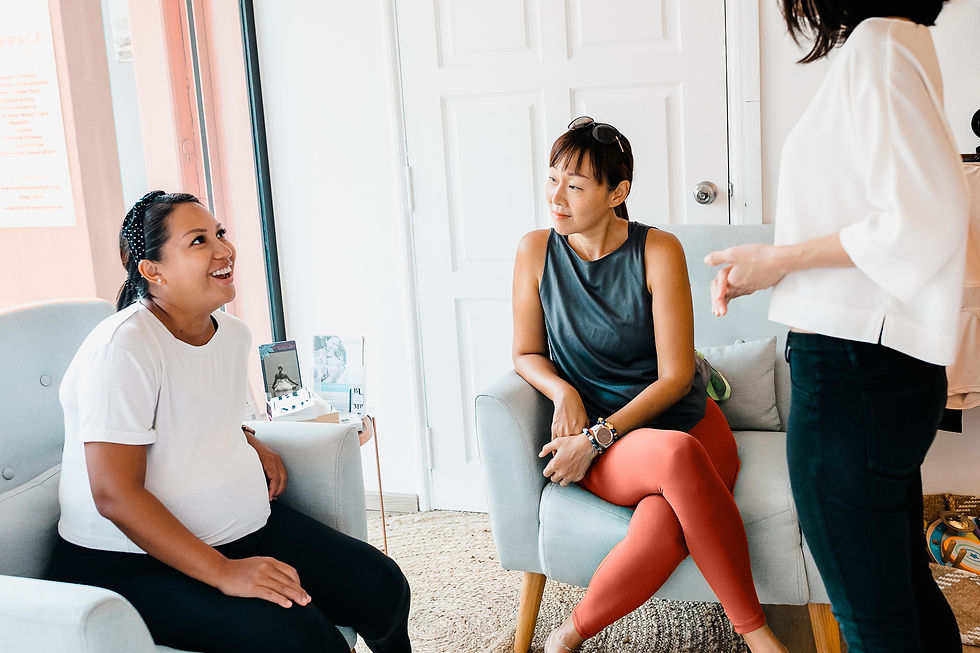
Her work centres around helping women understand their own baseline before surgery, because, as she explains, “arriving at surgery with unresolved pain means starting recovery from a harder baseline.” This includes addressing pelvic girdle pain, back pain, or hip discomfort during pregnancy, all of which are often dismissed as temporary, but do not simply resolve once the baby is born.
At the same time, she highlights something that many women are never told. “A C-section cuts through seven layers of tissue… every layer heals on its own timeline,” she explains, adding that abdominal fascia only regains around “51 to 59 percent of its tensile strength at six weeks.”
This is not presented as something to be alarmed by, but something to respect. When women understand the physiological reality of what their body is about to go through, recovery stops feeling like a personal failure and starts to make sense within the context of healing.
Preet also challenges one of the most persistent misconceptions around C-sections, which is that they somehow protect the pelvic floor. In reality, pregnancy itself places sustained load on the pelvic floor for nine months, regardless of how the baby is born. “Starting pelvic floor rehabilitation before surgery, not after, means you are reactivating a system you already know how to use,” she explains, and that familiarity can significantly improve recovery outcomes.
Creating a birth experience that feels more like your own
While much of the preparation focuses on the body, there is also a quieter but equally important layer around how the birth itself is experienced. For many women, particularly within structured hospital systems, the idea of a “gentle C-section” can feel uncertain or out of reach. But both preparation and communication can open up more possibilities than expected.

Sarah encourages parents to start these conversations early, using simple, collaborative language such as “How do you usually support a gentle C-section?” or “What options are available in this hospital?” These kinds of questions do not demand a fixed outcome, but they create space for discussion, and often lead to options that parents were not aware were available.
Alongside this, Amanda Lim brings the focus back to what remains within your control, even when the environment itself cannot be changed. She describes using box breathing as she was being wheeled into theatre, repeating mantras such as “I am powerful, I am capable”, and asking her partner to narrate the procedure so she felt informed and connected throughout.
These are not medical interventions, but they are powerful in a different way. They shift the experience from something happening to you, to something you are actively moving through. They allow you to feel present, grounded, and involved, even in a highly clinical setting.
Planning the support you will actually need
Across all three experts, one theme comes through consistently and without hesitation. Recovery is not something you should be doing alone, and yet it is something many women unintentionally approach that way.
Planning for support is often framed as something to figure out later, but in reality, it is one of the most important parts of preparation. That support is not just emotional reassurance, although that matters deeply. It is also practical, specific, and at times surprisingly detailed.

Amanda Lim emphasises that partner support in those early days is not just helpful, it is a critical part of recovery, and it works best when it is clearly directed. Rather than relying on general or open-ended requests, she encourages mothers to communicate specific, practical needs. “Being clear and direct about what you need makes it much easier for your partner to step in effectively,” she explains, describing simple but important actions such as adjusting pillows or supporting slow, controlled movements into position.
This kind of specificity removes guesswork, not just for you, but for the person supporting you. It allows them to step into their role with confidence, rather than uncertainty, and it allows you to conserve energy for healing rather than constantly navigating small but exhausting tasks.
Sarah reinforces this from a clinical perspective, highlighting how practical support, from setting up feeds to keeping essentials within reach, directly reduces strain on the body and allows recovery to progress more smoothly.
The tools that make a difference before you even arrive
When it comes to practical preparation, the answers are often less about complexity and more about intention. What matters is not how much you prepare, but how aligned that preparation is with what your body will actually need.
For Preet, one of the most impactful tools available in Singapore is not a product, but a service. “Birth prep physiotherapy… is, in my opinion, the most underutilised resource available to women planning a C-section,” she explains.
Sarah echoes this need for clarity, describing how many women leave hospital with excellent medical care but without a clear plan for recovery. Having a structured, step-by-step approach to follow at home removes the need to second guess every movement or decision, and replaces uncertainty with confidence.
Amanda’s work focuses on metabolic fitness and nutrition, both of which play a key role in how the body prepares for and recovers from surgery. At this stage, she supports women to build a strong physical foundation through targeted strength and conditioning, helping them maintain muscle, improve energy levels, and feel more physically supported going into their C-section. Alongside this, she works with women to optimise their nutrition, ensuring they are adequately fuelled for tissue repair, recovery, and the demands of early postpartum. This often includes focusing on protein intake, balanced meals, and simple, sustainable eating habits that can realistically carry through into the weeks after birth.
Individually, these things may seem small. Together, they create a very different starting point for recovery.
HOW EACH EXPERT CAN SUPPORT YOU AT THIS STAGE
By the time you reach the final weeks before a planned C-section, the goal is not to do everything. It is to focus on the things that will genuinely change how recovery feels.
Preet offers Birth Prep physiotherapy sessions, where your pelvic floor, breathing, and movement are assessed and optimised before surgery. You will also learn how to move safely after your C-section and what to expect during recovery.

Embrace Physiotherapy logo 
Embrace Physiotherapy logo 
Embrace Physiotherapy logo
Sarah provides structured, physio-led recovery programmes that guide you step-by-step through both pre and postnatal stages. This gives you a clear plan to follow, removing guesswork and building confidence.

C-SECTION HUB logo 
C-SECTION HUB logo 
C-SECTION HUB logo
Amanda supports women through metabolic fitness coaching and nutrition guidance, helping you build strength, improve energy, and ensure your body is properly fuelled for both surgery and recovery.

LIFT Clinic logo 
LIFT Clinic logo 
LIFT Clinic logo
FAQ: Preparing for a C-section
Do I really need to prepare for a planned C-section?
Yes. While the birth may be scheduled, recovery is still significant. Preparing your body and understanding what to expect can make a noticeable difference.
Is it too late to prepare if I’m close to my due date?
No. Even small adjustments, like learning how to move safely or planning your support, can have a meaningful impact.
Do I need to see a physiotherapist before my C-section?
It is not essential, but it is highly beneficial. It helps you understand your body and prepares you for recovery.
Does a C-section protect my pelvic floor?
No. Pregnancy itself places strain on the pelvic floor, so preparation and rehabilitation are still important.
What should I prioritise before surgery?
Understanding recovery, planning support, and learning safe movement are the most impactful areas.
Can I ask for a gentle C-section?
In many cases, yes. It depends on your hospital, but early and open conversations help.
What should I prepare at home?
Keep essentials within easy reach, plan your space to reduce bending or strain, and think about comfort and accessibility.
How important is partner support?
It is essential. Practical, hands-on support can significantly ease the physical demands of early recovery.
BEFORE ANYTHING ELSE, THIS IS WHAT MATTERS MOST
Preparation does not need to be overwhelming, but it does need to be intentional. When you understand what your body is about to go through, support it before surgery, and set up the right environment around you, recovery becomes something you are ready for, not something you are reacting to.
In Part 2, we move into the first 24 hours after your C-section, where the smallest decisions can make the biggest difference.
BECAUSE YOU SHOULDN'T HAVE TO GOOGLE MOTHERHOOD


Comments